- Dates
- April 19–May 16, 1943
- Armed groups
- ŻOB and ŻZW
- Civilians
- About 40,000–50,000 remained
- German commander
- Jürgen Stroop
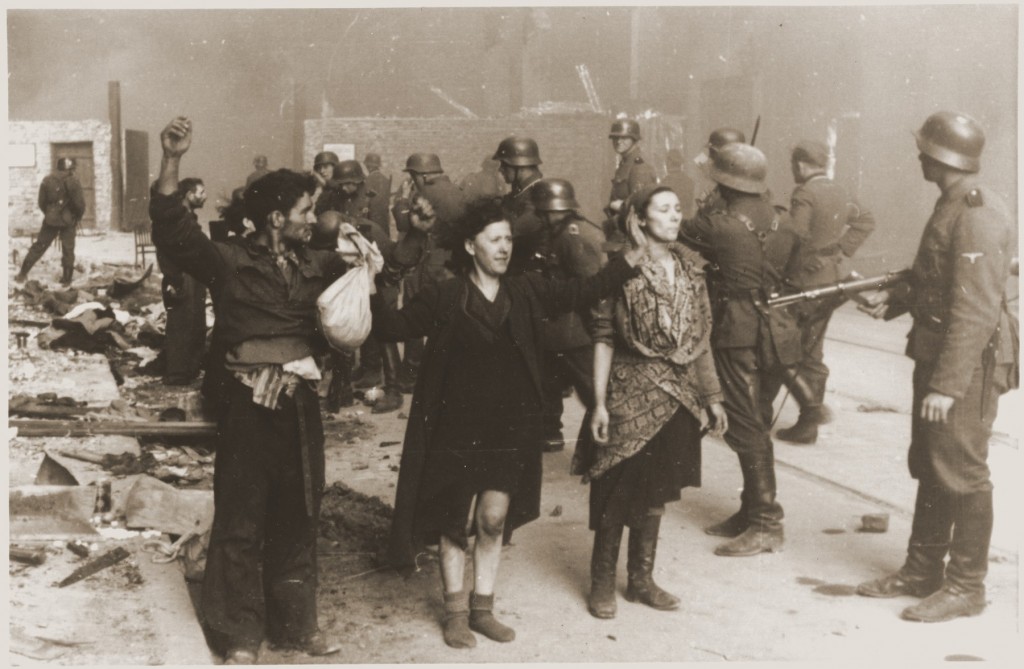
View original source at USHMM
View original video on YouTube
After the Great Deportation
The 1942 deportation of approximately 265,000 Warsaw Jews to Treblinka transformed expectations. Survivors increasingly understood that deportation meant death. ŻOB reorganized as a broad coalition, while ŻZW remained a separate Revisionist-oriented armed organization.
January 1943 resistance
On January 18, German forces attempted another deportation. Fighters attacked at close range while most residents hid rather than assemble. The operation ended after several days, encouraging bunker construction, weapons acquisition and wider support for resistance.
April 19
German units entered on the eve of Passover to liquidate the ghetto. ŻOB and ŻZW attacked with pistols, grenades, Molotov cocktails and a small number of rifles and automatic weapons. Ferdinand von Sammern-Frankenegg’s initial operation failed, and Jürgen Stroop assumed command.
Civilian resistance
Armed fighters were only one part of resistance. Tens of thousands of civilians refused to report for deportation and hid in an extensive system of bunkers. This forced German forces to search, burn and demolish the ghetto rather than conduct a rapid roundup.
Miła 18 and the sewers
On May 8 German forces surrounded the principal ŻOB bunker at Miła 18, where Mordechai Anielewicz and many others died. Simcha Rotem, Yitzhak Zuckerman and Polish helpers organized the sewer evacuation of several dozen fighters on May 10.
Stroop Report and aftermath
Stroop declared the operation complete after blowing up the Great Synagogue on May 16, though Jews remained concealed. His illustrated report claimed 56,065 Jews captured or killed; it is indispensable perpetrator evidence but not a verified census. Captured Jews were killed or deported to Treblinka, Majdanek, Poniatowa and Trawniki.
ŻZW and disputed evidence
ŻZW’s existence, independent structure and major fighting around Muranowski Square are secure. Because few leaders survived and later claims were sometimes embellished, exact membership totals and detailed battle narratives should be attributed rather than stated as certain. The history should neither erase ŻZW nor create a false rivalry with ŻOB.
Sources
This page is based on institutional and scholarly sources. Media credit links point to the original source page.