- Treblinka II
- July 1942–Nov. 1943
- Function
- Killing center
- Victim estimate
- Approximately 925,000 Jews
- Revolt
- August 2, 1943
View original source at USHMM
Two different camps
Treblinka I was a penal forced-labor camp established in 1941 near a gravel pit. Treblinka II, built nearby in 1942, was a purpose-built Operation Reinhard killing center. Their functions, prisoner populations and histories must be kept distinct.
Deportation and killing
The first mass transport from Warsaw arrived in July 1942. Deportees were forced to surrender valuables and undress, then driven through a fenced path to gas chambers supplied with engine exhaust. Most were murdered within hours and were never registered as camp prisoners.
Forced prisoner labor
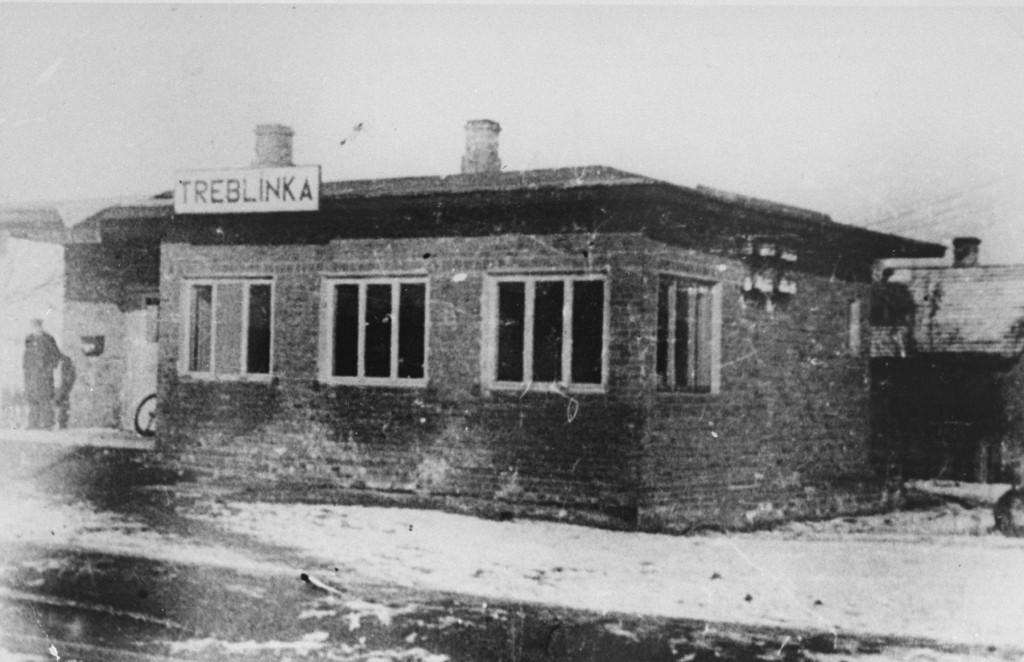
A small rotating group of Jewish prisoners unloaded trains, sorted stolen property, cut hair, removed bodies, buried and later burned corpses, and maintained facilities. German deception—including station signs and instructions about bathing and luggage—was intended to reduce resistance on arrival.
Perpetrators
Odilo Globocnik and Christian Wirth supervised Operation Reinhard. Irmfried Eberl was removed after the killing operation became chaotic; Franz Stangl then reorganized the camp. German and Austrian SS staff relied on Trawniki-trained guards.
The August 1943 revolt
Prisoners formed a clandestine committee, copied a key to the weapons store and planned an escape. On August 2, 1943, the revolt began prematurely. Prisoners seized weapons, set buildings on fire and rushed fences under gunfire. Several hundred prisoners broke through the camp perimeter during the revolt. Many were recaptured and killed; dozens survived the Holocaust. Estimates vary according to whether they count everyone who crossed the perimeter, those who escaped the immediate pursuit, or those who survived until liberation.
Dismantling and evidence
From spring 1943 prisoners were forced to exhume and burn bodies. After the revolt and completion of major deportations, the SS dismantled the camp, plowed the ground and established a farm to disguise the site. Survivor testimony, German records, archaeology and the Höfle Telegram provide independent evidence.
Sources
This page is based on institutional and scholarly sources. Media credit links point to the original source page.