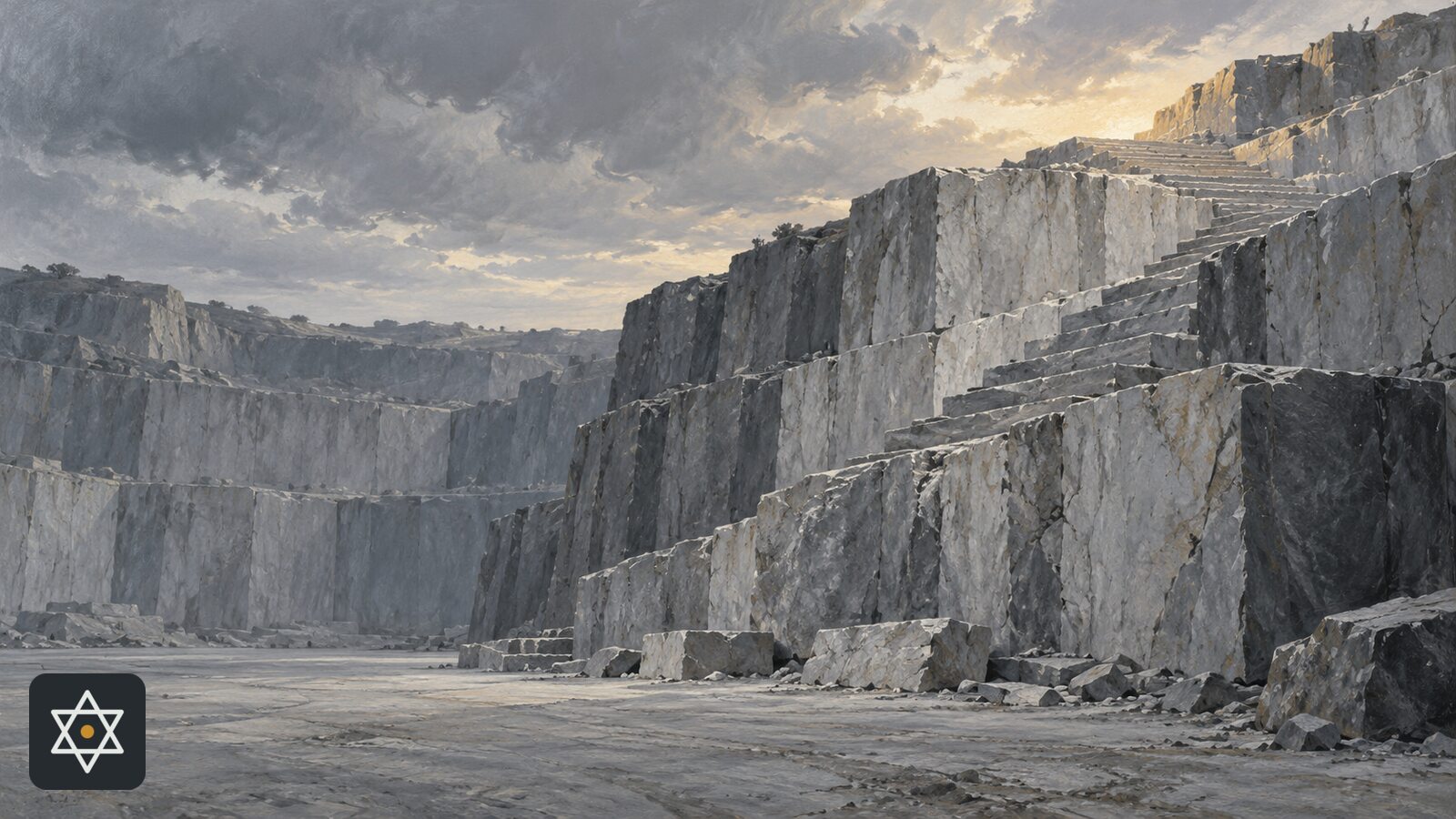
Mauthausen and Gusen formed the core of a Nazi concentration camp system in annexed Austria. Established around granite quarries, the camps combined economic exploitation with systematic brutality and murder. Their later expansion into armaments production did not make prisoners safe: underground construction, hunger and the final evacuations caused further mass death.
The Mauthausen Memorial estimates that around 190,000 people were imprisoned in the camp system and at least 90,000 died. Within that system, it gives approximately 71,000 prisoners and 36,000 deaths for Gusen. Gusen's figures are part of the wider history and must not be added to the system-wide totals as though they represented a separate population.
A concentration camp in annexed Austria
After Germany annexed Austria in March 1938, the SS selected Mauthausen, near the Danube, for a new concentration camp. The first prisoners arrived from Dachau on August 8, 1938. Initially German and Austrian men, they were forced to construct the camp and prepare the quarry for exploitation.
The location linked imprisonment to the SS building-materials enterprise. Granite was intended for monumental construction projects, including plans for Linz. The work was not simply ordinary quarrying performed by unpaid employees. Prisoners labored under coercion, punishment and conditions that could destroy their health and lives.
After the outbreak of war, deportees arrived from occupied Europe. The system held political prisoners, Spanish Republicans, Soviet prisoners of war, Jews and people persecuted under other Nazi classifications. Nationality and prisoner category affected treatment and access to relatively protective positions. Those classifications described a hierarchy imposed by the SS, not the human worth of those imprisoned.
The harshest camp category
In January 1941, the Nazi security apparatus designated Mauthausen a Category III camp. This category was intended for prisoners whom it portrayed as particularly incriminated and with little prospect of supposed reform. The designation expressed the authorities' intended severity; it did not establish that the prisoners were guilty of legitimate criminal offenses.
The history of Mauthausen and Gusen illustrates why concentration camps cannot be understood only through a single official classification. Treatment also varied by period, work assignment, health, nationality and the arbitrary decisions of guards. These variables operated inside a system that denied prisoners basic protection.
The broader page on camps and killing centers explains the different institutions of Nazi imprisonment and murder. Mauthausen was a concentration camp with forced-labor functions and facilities for killing. Its murderous character was not confined to one method or one phase.
The quarry and the "stairs of death"
The quarries became among the most recognizable features of the camp's history. Prisoners cut and moved stone under harsh supervision, with inadequate food and exhausting hours. Civilian specialists worked alongside the SS labor administration, connecting the camp to the wider economy.
At Mauthausen, prisoners were forced to carry granite up the quarry staircase known as the "stairs of death." The memorial identifies 186 steps. The significance of the staircase lies in the combination of heavy labor, violence and physical weakness, rather than in the number alone.
The memorial also documents deliberate killings at the quarry and misleading descriptions in camp records. A death recorded in administrative language may conceal the violence that caused it. Understanding such entries requires comparison with testimony and other records; an official form is evidence of what the administration recorded, not necessarily an honest account of what happened.
Gusen and the move into armaments production
The SS ordered the construction of Gusen in December 1939, and the camp officially began operating in May 1940. It became a major site in its own right, only a few kilometers from Mauthausen. Treating Gusen as a minor appendage would obscure the scale of imprisonment and death there.
During the later war years, the system expanded into weapons production and underground factory construction. At St. Georgen an der Gusen, the project code-named "Bergkristall" was intended to protect aircraft manufacturing from air raids. Gusen II opened in March 1944 to hold prisoners required for construction and production.
The change in economic purpose did not replace terror with a concern for workers' welfare. The speed demanded by construction projects, combined with confinement and deprivation, generated lethal conditions. The same prisoner could be valued as a source of labor and treated as expendable.
Jewish prisoners and the last year of the war
Jews were especially vulnerable within the camp hierarchy. Before the large arrivals of 1944, their numbers in Mauthausen were relatively limited, but their chances of survival were extremely poor. Later transports brought many Hungarian and Polish Jews, including people transferred from Auschwitz-Birkenau and Płaszów.
These movements link the camp's history to the Holocaust in Hungary. Deportation did not always end at the first camp to which a person was sent. Those selected for forced labor could pass through several systems, each transfer introducing new dangers and separating them further from family and familiar surroundings.
In the final months, Mauthausen also became a destination for evacuations from camps approaching the front. Hungarian Jewish forced laborers were driven westward, while other prisoners arrived on trains or after marches. The terms evacuation transport and death march describe related but different forms of movement; they should not be treated as interchangeable in every individual's story.
Overcrowding, death marches and liberation
The arrival of large numbers of exhausted prisoners overwhelmed already inadequate conditions. Food shortages and disease intensified. The main camp increasingly held people who were sick or unable to work, while transfers within the system dispersed danger to other sites rather than resolving it.
The Mauthausen Memorial's history records the arrival of the US Army at Mauthausen and Gusen on May 5, 1945. That date concerns these two sites; the liberation of a network of subcamps was a process, not one simultaneous event everywhere.
Many prisoners were so weakened that they died after liberation. Medical assistance and food were urgent, but recovery also required finding relatives, obtaining information and deciding where to go. The page on death marches, liberation and aftermath examines this difficult transition more fully.
Reading the numbers and the surviving evidence
The memorial's estimate of at least 90,000 deaths reflects the scale of the entire camp system. Records were incomplete, people were transferred, and registration deteriorated during the final collapse. Precision about the scope of a figure is therefore more useful than presenting an uncertain total as exact.
For family research, a reference to Mauthausen may identify the system's administrative center while the person was held at Gusen or another subcamp. Registration records, transport lists and testimony should be assembled into a chronology. Dates of arrival and liberation alone cannot explain the work, illness or transfers between them.
The quarry, industrial projects and surviving documents reveal a system in which exploitation and killing were closely connected. Gusen belongs at the center of that account. Its prisoners and victims cannot be reduced to a footnote attached to the better-known name Mauthausen.