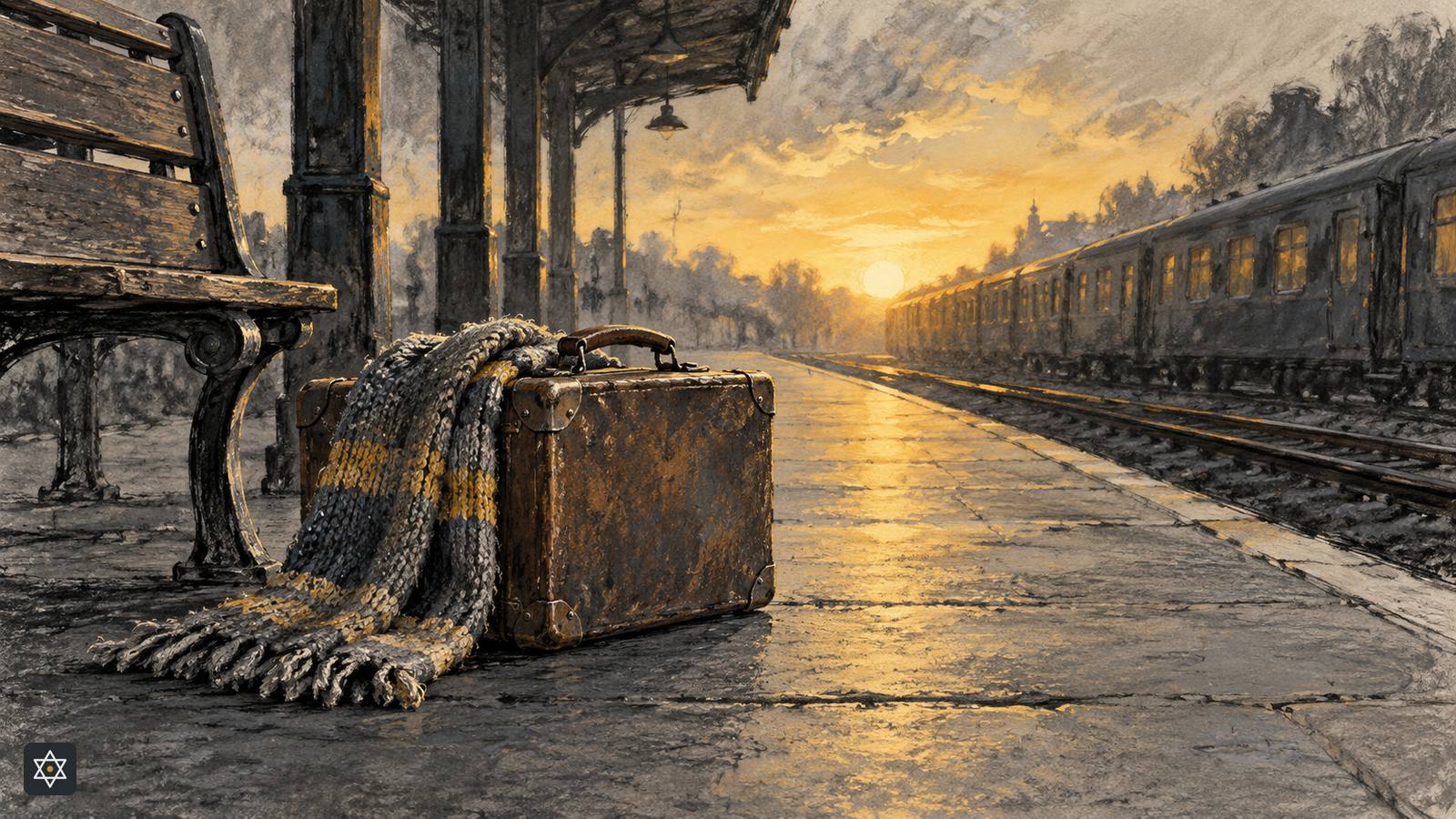
The Kindertransport was a series of rescue efforts that brought approximately 10,000 children, the great majority Jewish, to Britain between December 1938 and May 1940. It opened an escape route after the November Pogrom, but admission was generally restricted to unaccompanied children. Parents who secured a place for a son or daughter could not assume that they would be allowed to follow.
The children came chiefly from Germany, Austria and Czechoslovakia, with smaller groups from elsewhere, including the Free City of Danzig. Jewish organizations, refugee committees, volunteers, sponsors and host families made the journeys possible. Their success was real, but it was also bounded by immigration rules, money, time and war. Most of the children never saw their parents again because their parents were murdered in the Holocaust.
Why the rescue effort began
By late 1938, Jewish families in Nazi-controlled territory had already faced years of exclusion and growing insecurity. The November Pogrom intensified that danger through attacks on homes, businesses and synagogues and the mass arrest of Jewish men. Parents now had to make decisions under conditions in which waiting could itself be dangerous.
British refugee organizations pressed the government to admit children. The resulting policy allowed unaccompanied minors under seventeen to enter temporarily, provided that private individuals or organizations took responsibility for their support. The US Holocaust Memorial Museum describes the arrangement as a relaxation of restrictions for a particular group, not a general opening of Britain to every refugee family.
That distinction shaped the rescue from its beginning. The government permitted entry, while much of the practical and financial responsibility rested outside the state. A child needed more than permission in principle: someone had to organize travel, provide a guarantee and arrange care after arrival. The outcome depended on a chain of people and institutions whose contributions were different but connected.
The context of Nazi persecution before the war also explains the urgency of the parents' decisions. They were responding to actual losses and threats, not acting with complete knowledge of the genocide that would follow. Their choices should be understood through the information and opportunities available at the time.
Who organized and financed the journeys
The name Kindertransport can suggest a single centralized operation. In practice, it covered interconnected efforts by multiple organizations. Jewish communal bodies in Germany and Austria identified children, assembled documents and arranged departure. British committees coordinated reception and placement. Quakers and other Christian groups worked alongside Jewish organizations and individual volunteers.
A financial guarantee of fifty pounds per child was part of the British arrangements. It was intended to cover the possibility of onward travel or return, alongside commitments to prevent children becoming a public financial responsibility. Sponsors and charitable networks therefore mattered directly to admission. A parent's desire to send a child was not enough if the required arrangements could not be secured.
Organizers had to make painful choices when demand exceeded immediate capacity. Children whose parents were imprisoned, children without support and those in especially urgent danger could receive priority. A place on a transport should not be mistaken for evidence that one child's life mattered more than another's. Selection reflected emergency conditions and limited access to safety.
The work of Jewish organizers also deserves attention. They were not simply recipients of assistance from abroad. They processed requests and accompanied children while living under the same threatening regime. Norbert Wollheim, whose testimony is held by USHMM, worked on arranging children's departures before he and his own family were later deported. Rescue history includes this labor by people who remained in danger themselves.
From home to the British coast
The first transport reached Harwich on December 2, 1938, carrying approximately two hundred children. The Kindertransport Association gives the more specific count of 196. The difference between a rounded description and an exact transport figure should not be treated as a contradiction.
Most journeys combined rail travel across continental Europe with a sea crossing to Britain. Children gathered in major cities such as Berlin, Vienna and Prague. Those from smaller communities first had to reach these departure points. Routes commonly passed through the Netherlands or Belgium before the crossing, although arrangements varied and some children traveled by air.
The Free City of Danzig requires particular geographical care. It was not simply a town inside prewar Germany or Poland. Its status and the citizenship of the people leaving it should be distinguished from broad retrospective lists of countries of origin. A child's journey can involve one birthplace, another nationality and a third place of departure.
For the children, the route was also a separation from language, familiar routines and parental protection. Luggage could carry clothing or a treasured object, but not the household left behind. Surviving travel documents and possessions are valuable because they connect an administrative operation to a specific child's life. They cannot, by themselves, reveal everything that child understood or felt.
Why parents could not come
The admission scheme was designed for children traveling without their parents or guardians. Adults needed to qualify through other immigration routes. This restriction allowed some children to escape while leaving the wider family's future unresolved. It is central to the history, not a minor administrative detail.
Parents often hoped separation would be temporary. The plan to send a child ahead could be combined with efforts to obtain their own visas or find work abroad. War and Nazi persecution destroyed many of those possibilities. Later knowledge of the parents' fate should not be used to suggest that families freely chose permanent separation with full understanding of what lay ahead.
Children likewise had different understandings of departure. Their ages, earlier experiences and what adults told them mattered. Some were old enough to grasp the danger; others experienced the immediate loss of home more clearly than the political reason for leaving. Testimony must be read as an individual's account rather than a script that can be assigned to every child on every train.
The wider history of children and women during the Holocaust helps place these decisions within family life under persecution. Protection could require an action that was also profoundly disruptive. Rescue and loss were not mutually exclusive outcomes.
Finding a place in Britain
Arrival did not mean that every child immediately entered a permanent home. Those without placements could be housed temporarily at Dovercourt and other reception facilities. Children later lived with foster families, in hostels, schools or on farms. The conditions varied considerably, as did the emotional and religious support available.
Learning English was one immediate task. Schooling, friendships and relationships with caregivers also had to be rebuilt. Older children could face pressure to work or train for employment. A safe destination did not erase grief, uncertainty about relatives or the difficulty of adapting to unfamiliar expectations.
Some placements were caring and enduring; others involved loneliness, misunderstanding or exploitation. A responsible account should leave space for those differences. National gratitude for a rescue operation cannot require every rescued person to describe their subsequent experience as uniformly happy.
Siblings were not always placed together. Letters could connect children with parents for a time, but communication became more difficult as war spread. The silence of a missing reply did not necessarily provide immediate knowledge of death. For many children, the effort to discover what had happened continued long after the military defeat of Nazi Germany.
War closed routes and created new dangers
The outbreak of war in September 1939 largely ended the organized departures from Nazi territory. A final evacuation from the Netherlands in May 1940 explains why many institutional accounts use the date range 1938–1940. It should not be understood to mean that normal transport arrangements continued uninterrupted throughout that period.
Children who had reached continental countries were not automatically safe for the rest of the war. German invasions could place refugees in danger again. The meaning of rescue depended on the destination and on subsequent events, not only on the moment someone crossed the first border.
In Britain, wartime security measures produced another reversal. Some older refugees were classified as “enemy aliens” because of their nationality, despite having escaped Nazi persecution. USHMM reports that around one thousand older Kindertransport refugees were interned in 1940. Some were sent to camps on the Isle of Man, in Canada or in Australia.
This category described an official wartime classification, not proof of Nazi sympathy. Treating it as a factual description of the refugees' loyalties would reproduce the injustice of the label. Some of the young men later served in British forces against Germany, a further reminder that nationality and political allegiance were not interchangeable.
After the war and in family memory
After 1945, some children remained in Britain and others moved to countries including the United States, Canada, Australia and Israel. Family reunions occurred, but the majority never saw their parents again. An individual family's outcome must be established from its own records rather than inferred automatically from the general pattern.
Dorrith Oppenheim, for example, left Germany in July 1939 and survived in Britain; her parents were later murdered at Auschwitz. The Engelhard siblings, by contrast, were eventually reunited with parents who escaped. USHMM preserves both histories. Their differences prevent the collective story from flattening every life into the same ending.
Research may begin with a child's birth name, later name, departure date and sponsor. Transport lists, correspondence, school records and testimony can then be compared. The site's family research guide explains why variant spellings and changes of surname can be important. A missing name in one list is not proof that a journey did not occur.
The Kindertransport belongs in the history of resistance, hiding and rescue as both an achievement and a limited response. It demonstrates that coordinated action could save lives, while its conditions show who was left outside the available protection. Remembering the children accurately means remembering their parents, the organizers who worked under pressure and the years of rebuilding that followed arrival.
Sources
- United States Holocaust Memorial Museum, Kindertransport, 1938–40, updated 2021
- Kindertransport Association, Historical Timeline, undated
- Kindertransport Association, Rising to the Moment, undated
- Holocaust Museum Houston, Kindertransport Guide, undated
- Kindertransport Association, Our Founder, undated