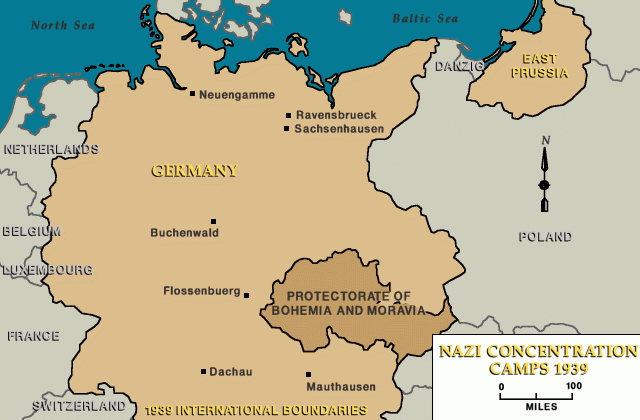
View original source at USHMM
Occupation
Germany invaded Poland on September 1, 1939. Occupation exposed millions more Jews to Nazi power and introduced forced labor, property seizure, movement restrictions and concentration in ghettos. German conquest of western Europe in 1940 brought both Jewish citizens and refugees under direct or collaborationist rule. Policies and levels of local participation differed significantly by country and region.
What were ghettos?
Nazi ghettos were coercive urban districts used to isolate, exploit and control Jews and later to facilitate deportation. They were not autonomous Jewish communities. Conditions differed, but overcrowding, hunger, disease, forced labor, family disruption and uncertainty were widespread. At the same time, residents created clandestine schools, cultural activity, mutual aid, religious life, archives, smuggling networks and resistance.
Major ghettos
Warsaw became the largest ghetto. Łódź developed into a major forced-labor complex. Vilna is inseparable from the nearby killing site at Ponary and from the FPO underground. Kovno connects the ghetto with the Ninth Fort; Białystok with forced labor and uprising; Kraków with deportations and Płaszów; Minsk with mass shootings and partisan escape; Theresienstadt with transit, forced labor, propaganda and deportation. Each ghetto had its own chronology and should be studied on its own terms.
Sources
This page is an educational synthesis based on the following sources. Consult the full sources for deeper research.