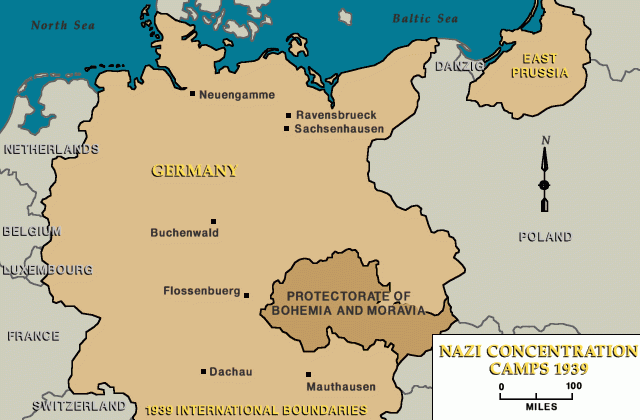
View original source at USHMM
Central and Eastern Europe
Poland had Europe’s largest prewar Jewish population and became the geographic center of ghettos, deportation and the principal killing centers. In the occupied Soviet territories, mass shootings were central. Lithuania, Latvia and Estonia saw rapid mass murder and varying forms of local participation. Hungary’s provincial Jewish population was deported with extraordinary speed after the German occupation in March 1944. Romania carried out major anti-Jewish violence under its own authorities in Bessarabia, Bukovina, Transnistria, Iași and Odessa.
Western and Northern Europe
France combined German occupation with Vichy antisemitic legislation and administration. The Netherlands developed extensive registration and deportation systems; Belgium used the Mechelen transit camp. Denmark’s October 1943 rescue to Sweden saved most Danish Jews, while Norway saw collaborationist government and police participation in arrests and deportations. Italy introduced Fascist racial laws in 1938 and experienced intensified deportation after German occupation in 1943.
The Balkans and special cases
Greece lost ancient Sephardic communities, especially in Thessaloniki. Yugoslavia was partitioned among occupation and collaborationist regimes; Serbia, Croatia and North Macedonia require separate treatment. Bulgaria’s prewar Jewish population largely survived deportation, while Bulgarian authorities deported Jews from occupied Thrace and Macedonia. Albania had comparatively high Jewish survival, but its history should be explained in context rather than reduced to a national myth of rescue.
Sources
This page is an educational synthesis based on the following sources. Consult the full sources for deeper research.